
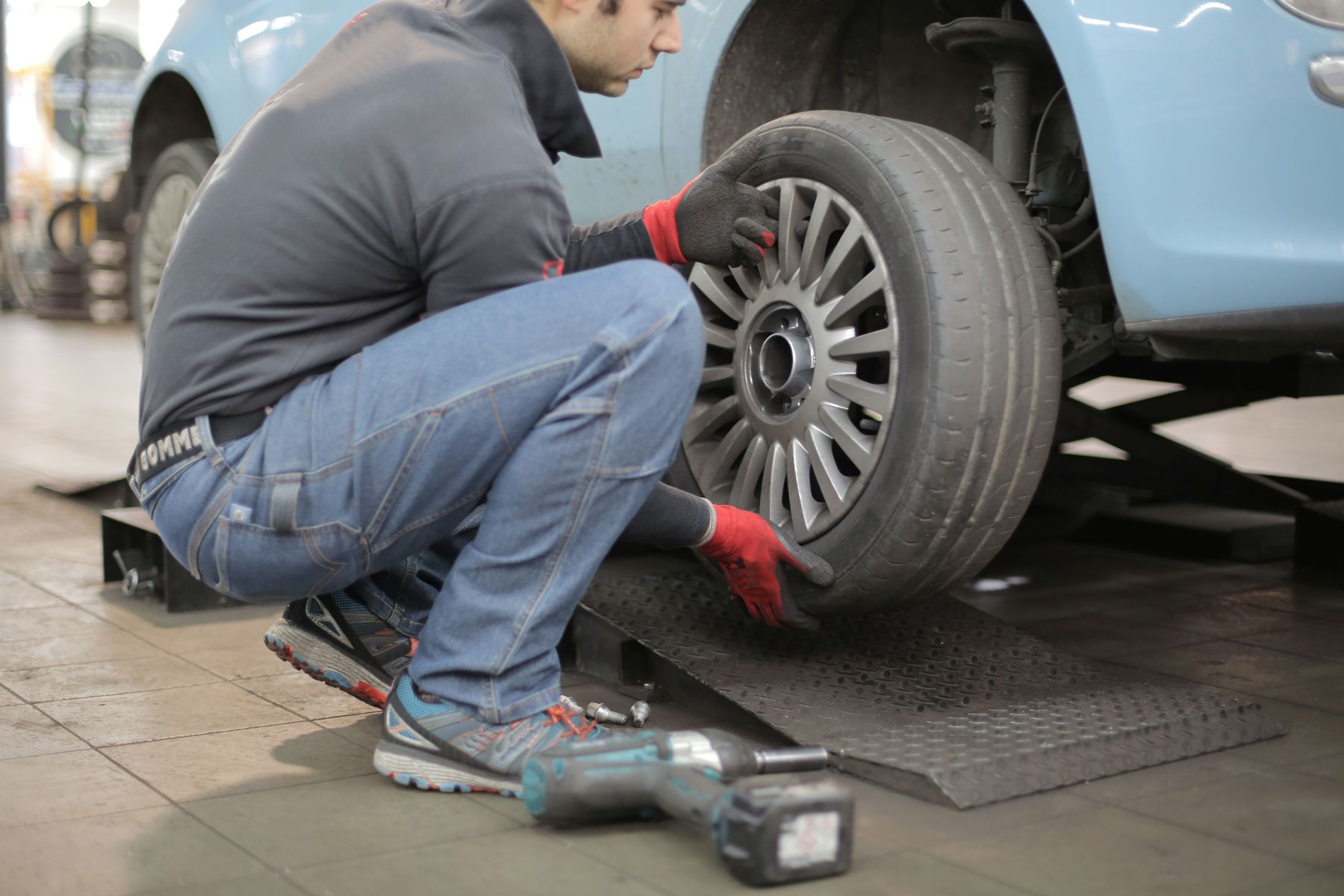
What auto repair means here
Auto repair at DriveCore Service means workshop attention to a passenger vehicle that is no longer behaving as the driver expects, or to a component that has worn enough to need more than routine maintenance. The page is about how that work is discussed: which system is involved, what the car is doing, and which decisions belong in the bay rather than in a paragraph. It is not a job card, not a list of labour times, and not a promise that a particular fault will be corrected.
Repair sits next to maintenance, but it is not the same conversation. Maintenance is planned care for fluids, filters, and inspections. Repair starts when something is already wrong, noisy, leaking, warning, or unsafe. Many visits contain both. A brake noise may lead to a friction repair and also to a question about how long the rest of the system has been in service. This page keeps the repair question in front, and it links outward when the subject is really diagnostics, brakes, suspension, the engine, or the electrical system.
The website will not invent a menu of repairs that has not been described. If a procedure is absent, that absence is information. It means the procedure is not confirmed here. Drivers sometimes arrive from another site that lists every possible job a workshop could theoretically perform. DriveCore Service does the opposite. The confirmed subjects are the ones with their own pages and the ones named in those pages. A general wish to “fix the car” is a starting point, not a scope of work.
The opening conversation
A useful repair inquiry names the vehicle only as far as it helps the symptom make sense, then spends its words on behaviour. When did it start. Does it happen at idle, at speed, on a cold morning, or only after a long drive. Is there a noise, a smell, a vibration, a leak, or a light. Those details are the brief. A year, a colour, and a demand for a same-day outcome are less useful, and the last of those is a claim this site does not make.
Bring one priority if several things are wrong. A car can have a soft pedal and a slow crank at the same time. Saying which one makes the car feel unsafe, and which one can wait, lets a reply stay honest. The contact form does not rank your concerns for you, and it does not reserve a bay. It carries the words you type, and only when delivery is connected.
Reference videos and photographs can help if you say what to look at. A clip of a noise is a clue, not a contract. Phone microphones flatten sound, and a still image of a leak does not show how fast it grows. Treat them as support for the sentence you write, not as a substitute for that sentence. The service notes collect smaller reminders for this kind of description.
Which system the repair belongs to
Most repair questions land in one of the systems this site already explains. Engine complaints include rough running, temperature, leaks, and loss of power, and they continue on the engine page. Stopping complaints continue on the brake page. Wander, clunks, and uneven tyre wear continue on the suspension and steering page. No-starts, dim lights, and charging stories continue on the electrical page. If you are not sure which system is speaking, say so. Guessing the wrong chapter is less helpful than describing the symptom cleanly.
Some symptoms cross a boundary. A vibration under braking may be a disc, a tyre, or a suspension joint. A warning light may be an engine-management issue or a charging issue. The diagnostics page exists for that uncertainty. Repair writing on this page assumes that, once the system is understood, the work is about restoring serviceable condition rather than about selling a named component from a catalogue the site does not publish.
DriveCore Service does not state that every make and model is serviced, and it does not state that any make is excluded. Those facts are not published. An inquiry can ask whether a particular vehicle is something the workshop can discuss. The answer, if one is given, comes from a person, not from this paragraph.
During the work
If a visit takes place, the standard this website describes is that you should be able to hear what is about to be done in plain words, especially when the step is difficult to undo, such as replacing a major component or opening a sealed system. Asking what was found, and what would be left alone, is part of a careful repair. The site does not publish the name of a technician or a method, because those details are not confirmed for public pages.
A repair can reveal a second issue. Worn brakes can expose a seized slider. An oil leak can sit near a cooling hose. The honest response is to separate what was requested from what was found. This page does not authorise extra work by implication, and it does not forbid a conversation about it. It only refuses to pretend that a webpage has already approved a scope.
Parts, if they are needed, are not listed by brand here. The site does not claim original-equipment supply, a preferred aftermarket line, or a policy of reconditioning. If those choices matter to you, put that preference in the inquiry as a question, not as an assumption that the workshop has agreed. Nothing on the page is a quotation.
Limits of what we claim
DriveCore Service does not guarantee a repair. It does not promise that a noise will disappear, that a warning light will stay off, or that a vehicle will pass any inspection. It does not offer free diagnostics, same-day completion, or twenty-four-hour attendance. It does not describe the workshop as certified, authorised, or a dealer for any manufacturer. Those phrases are absent because they have not been established for this website. Using them without evidence would mislead a reader who is comparing the site with an advertisement.
The pages are also not a safety certificate. If a car pulls, if a pedal goes to the floor, if you see smoke, or if steering feels loose, do not treat an article as permission to continue a journey. The website cannot see the vehicle. Urgent mechanical risk belongs with a person who can, and this site does not provide a recovery number because none is published.
Legal and consumer rights that may exist where you live are not cancelled by this page, and they are not expanded by it either. The terms explain the informational character of the site and the limits of what a form message means. They do not invent a workshop warranty.
After the repair conversation
After work, compare the car with the symptom you wrote down, not with a hope the page never stated. If the original noise is gone and a different noise remains, those are two facts. Write them separately if you inquire again. A follow-up that quotes your first sentence is easier to answer than a message that only says the car is worse.
Home experiments on brakes, fuel, airbags, or high-voltage components of any vehicle are outside the advice of this site. The pages do not include procedures, torque values, or bleeding sequences, because publishing a partial method would look like an instruction the workshop has not confirmed. If you were given a specific instruction in person, that instruction belongs to that conversation, not to a generalised article.
There is no published redo rule and no published refund rule. Do not invent one from the length of this page. Questions about what was agreed belong in a direct inquiry, and only after a message has actually been delivered. Until the form says a message was accepted, nobody on the other side has your text.
How repair sits with maintenance
A repair often ends with a maintenance question. Fresh brakes do not replace an overdue oil service, and a new battery does not inspect the cooling system. The maintenance page describes planned care so that a fault visit is not the only time the car is considered. Preventive notes in the inspection section list things a driver can look at without claiming to have performed a professional inspection.
It is reasonable to ask, in an inquiry, whether a symptom should be handled as a repair, as maintenance, or as a diagnostic visit first. The website’s preference is to gather information before parts are assumed. That preference is editorial. It is not a rule that binds a future conversation, and it is not a fee structure, because no fees are shown.
Questions worth bringing
Useful questions are concrete. Which system do you think is involved, and what makes you unsure. What changed just before the symptom. Whether the car is currently driveable in your own judgement. Whether you want information first or you already know you are asking about a worn item you can see, such as a torn boot or an obvious leak. Each of those can be answered, if at all, only by a person after the form actually sends.
Less useful questions ask for a price, a discount, a guarantee in writing, or a diagnosis from a paragraph. This site will not supply them. The FAQ repeats that boundary. If you are comparing workshops, compare the description of the work, not a number that is not here and not a star rating that was never collected.