
What engine service includes
Engine service at DriveCore Service covers two neighbouring ideas: maintenance that keeps the engine lubricated and cool, and repair that responds when the engine no longer runs, starts, or stays at a steady temperature as the driver expects. The page describes those ideas in workshop language. It does not publish a rebuild menu, a performance modification list, or a set of labour times.
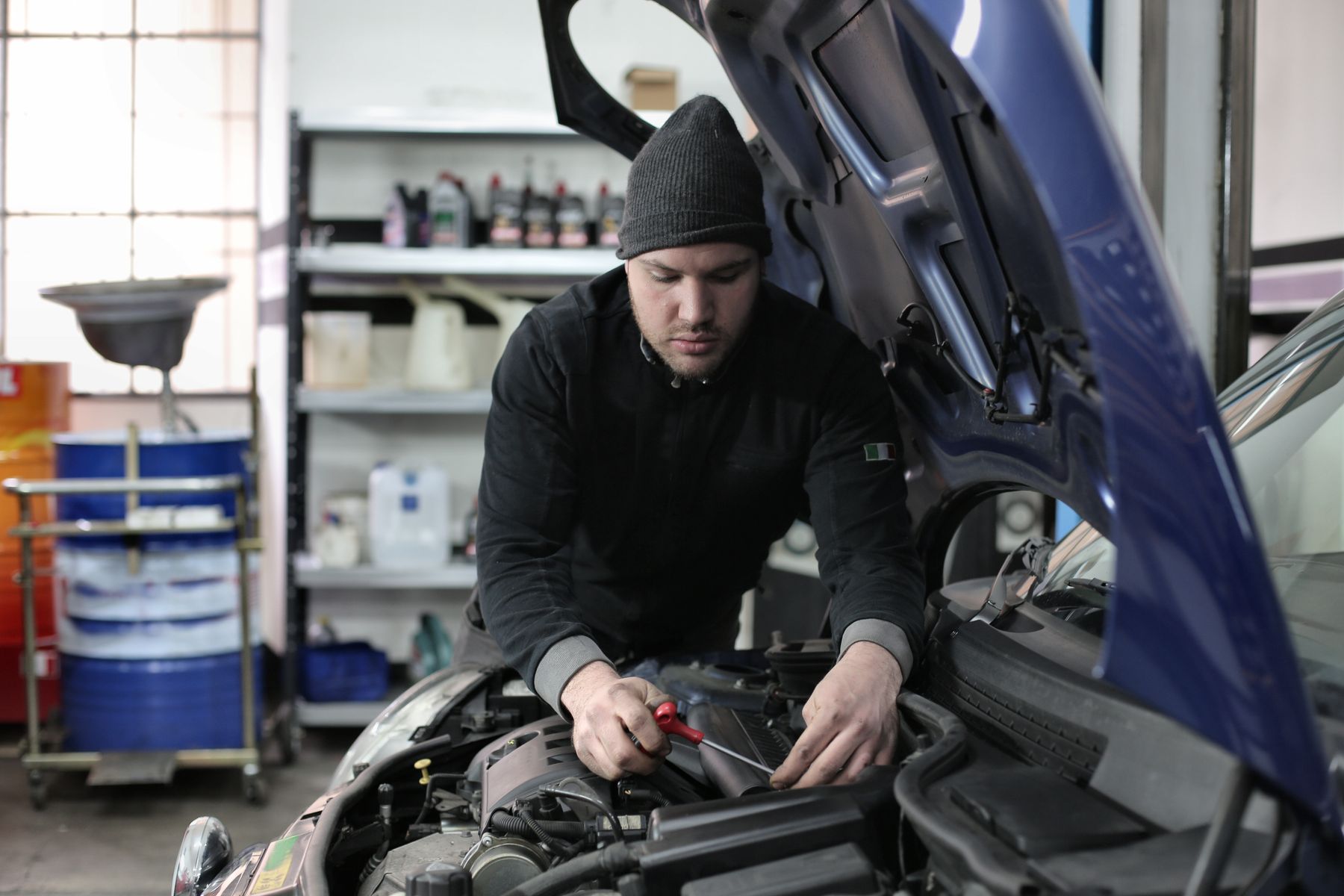
The image shows hands working in an engine bay. It illustrates access to the engine, not a named procedure and not a DriveCore Service employee. Belts, covers, and fluid reservoirs may be visible in pictures of this kind. Their presence in a photograph is not an inventory of parts the workshop stocks.
If the complaint is still a mystery, start with engine diagnostics. If the request is a planned oil and filter service without a fault, the maintenance page is the closer match. This page is for readers who already know the engine is the subject and want the boundaries of that subject written down.
How the engine is behaving
Useful engine descriptions separate starting from running. A slow crank is often an electrical question even though it feels like an engine question. A click and no turnover, a crank without firing, and a start followed by a stall are three different sentences. Write the one that matches. Then say whether the engine is cold or already warm, and whether the behaviour repeats every time.
Once the engine is running, notice idle quality, hesitation, loss of power, unusual smoke, and knocks. Smoke colour and when it appears can matter, but this site will not teach you to diagnose smoke from a description alone. It will ask you, if you inquire, to say what you saw rather than what you concluded. A knock that grows with engine speed is a different report from a rattle only at idle.
Cooling system maintenance
Cooling keeps the engine inside a temperature range it can survive. Maintenance of that system, as described here, means attention to coolant condition, visible leaks, and temperature behaviour in traffic and on longer runs. It does not mean a published flush interval or a branded coolant. If the gauge rises only in queues and settles on the open road, say that. If it rises quickly and does not settle, say that too, and do not keep driving because a webpage sounded calm.
Fans, thermostats, radiators, water pumps, and hoses are the family of parts people mention. Naming them is not the same as knowing which one has failed. The site lists the family so a conversation has vocabulary. It does not authorise replacement of the whole family. A leak at a hose end and a leak from the front of the engine are different places. Point to the place if you can do so safely with the engine off and cool.
Lubrication and the things around it
Oil level and oil leaks sit between maintenance and repair. A level that falls slowly may be a maintenance observation. A sudden drop, a warning light, or oil on the ground after every parking is a fault report. The site does not give a capacity or a grade. Those figures belong to the vehicle, not to a general article that would be wrong for the next reader.
Drive belts and related pulleys are another boundary. A squeal at start that fades can be a belt story. A squeal that remains, or a belt that looks frayed, should be described rather than adjusted from instructions this site does not provide. No tension specification is published here.
What this page does not treat
Engine service on these pages is not internal engine building, not tuning for more power, and not a claim that any racing or modified engine is welcomed. Those activities are not described because they are not confirmed. The page is also not a guide to working on the engine at home. Fuel systems, timing components, and anything near a running fan are poor subjects for a copied method.
No warranty period is attached to engine work. No turnaround is promised. No statement is made that the workshop is a specialist in a particular manufacturer. If your question depends on one of those facts, the fact is missing on purpose, and the inquiry is the place to ask whether it can be discussed at all.
After engine work
After any real visit, listen for the symptom you originally reported. A repair that changes the noise but does not remove it needs a precise follow-up. Note temperature on the next few drives if temperature was the complaint. Do not remove a cooling cap on a hot engine to “check the work”. That is not aftercare. It is a burn risk the site will not encourage.
If you were told in person to watch a level or to return if a light reappears, follow that instruction rather than a general paragraph. The paragraph can only say: compare the car with the brief, and write again if the brief and the result do not meet. There is still no published redo policy.
How to inquire
Lead with engine service, then the behaviour, then the condition. Add whether you are asking about maintenance, a leak, temperature, or a running fault. One priority is enough. The contact form is the route, and it confirms nothing until a delivery service accepts the message. Payment data does not belong in the box.
Noises that belong in the engine sentence
Engine noises are easy to misname. A tick that follows engine speed, a knock under load, and a squeal that changes when the steering is turned may not even share a cause. Say whether the sound follows the tachometer or the road speed. Sounds that follow road speed often belong to wheels, brakes, or suspension, even if you first hear them from the driver’s seat and assume the engine. The distinction saves a conversation from starting in the wrong chapter.
Smell belongs in the same careful category. A hot smell after a hard drive, a sweet smell with a falling coolant level, and a raw fuel smell at start are different reports. Do not open a hot cooling system to investigate a smell. Describe the smell and the gauge. The website will not convert that description into a parts list, and it will not tell you the engine is safe to keep using.