
Why brakes are their own subject
Brake system service is separate on this website because stopping is a safety function, not a finish that can be described loosely. The pages talk about friction components, pedal feel, vibration under braking, warning lights, and the hydraulic parts that carry force from the pedal to the wheel. They do not talk about styling wheels, and they do not sell a brake upgrade as a lifestyle product.
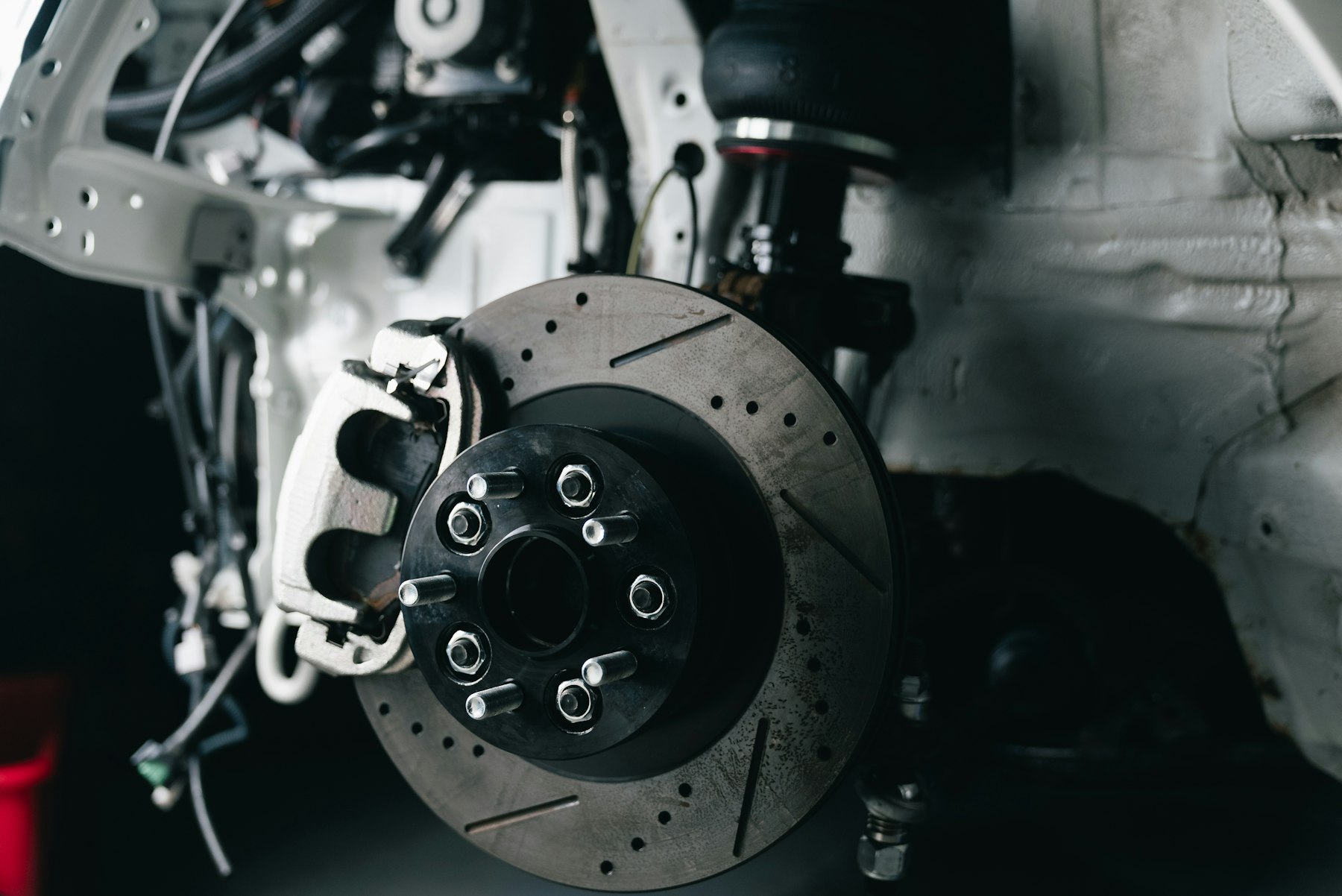
The photograph is a close view of a disc, a caliper, and part of the suspension. It shows the kind of hardware the words refer to. It is not a before-and-after of a DriveCore Service job, not a measurement of thickness, and not evidence of a particular pad compound. If a brand name is not readable as a claim in the text, do not import one from a picture.
A second image lives in the gallery for readers who want a closer look at a disc and caliper behind a wheel. Captions there repeat the same limit: illustration, not a parts catalogue.
Discs, pads, and what you can feel
Friction service is the part of brake work people mean when they mention pads and discs. Noise, a grinding that was not there last month, and a pedal that pulses under braking are the ordinary clues. A squeal that appears only on the first stop of the morning is a different report from a grind that is present every time. Write the difference. The site will not tell you from that sentence whether a part is worn through. It will tell you that the difference is worth preserving in the inquiry.
Vibration through the pedal is often discussed alongside discs, but it can also involve tyres or suspension. If the steering wheel shakes only when you brake, say so. If it shakes at speed even when you are not braking, the suspension page may be the better companion, and you should mention both rather than force one explanation.
Pedal feel and hydraulics
A pedal that sinks slowly, a pedal that feels soft, or a pedal that needs more travel than you remember is a hydraulic story until a person shows otherwise. Fluid condition, leaks at wheels or along lines, and warning lamps belong in that story. This page names the story. It does not give a bleeding procedure, a fluid specification, or a torque. Publishing a partial method would look like permission to open a safety system at home.
If the pedal goes to the floor, or the car will not stop as you expect, do not continue a journey in order to collect a better description for a website. The article is not emergency assistance. There is no published recovery telephone. The correct priority is the physical safety of the people in the car, not the completeness of a form.
During an inspection
A brake inspection, as this site uses the phrase, means looking at the condition of the stopping system and saying what was seen in plain words. It is not a legal certificate, not a pass or fail for an official test, and not a free check. The site does not state that inspections are complimentary. If you want to know whether an inspection can be discussed, ask. Do not infer a price or a gift from the silence.
Useful inspection language separates the wheels. A noisy front left is not “the brakes” in general. Uneven wear, a seized slider, or a leaking cylinder, if found in a real visit, should be named as found rather than bundled into a single dramatic sentence. The website cannot find those things for you. It can only ask you not to collapse them into a guess before anyone has looked.
What this page excludes
Performance brake kits, racing compounds, and branded calipers are not a service line on this site. A red caliper in a gallery picture is a colour in a photograph, not a product offer. The page also excludes any promise of stopping distance, any warranty on friction parts, and any claim that work will be finished the same day. None of those statements has been confirmed.
Brake service is not a substitute for tyre replacement advice with a tread number, because no tread standard is published here. Tyres affect stopping, and you may mention them, but the site will not invent a legal minimum or a brand of tyre.
Afterwards
After brake work, the first stops can feel different because the system has been disturbed and because new friction surfaces need ordinary use to settle. This page does not give a bedding procedure with speeds and counts. It says only that a change in pedal feel should be compared with what you were told in person, if you were told anything, and that a warning light that remains on is a reason to inquire again rather than a reason to adjust the system yourself.
Quote the original symptom in any follow-up. “The pedal pulsed at motorway speed and now it does not, but a squeal remains on light stops” is a clear report. “The brakes are wrong” is a feeling you are allowed to have, and it is a weak brief.
What to ask
Ask whether the conversation should start with inspection or with a noise you can already demonstrate. Mention if the car pulls to one side only while braking. Mention if a lamp is on. Leave prices, guarantees, and brand demands out of the first message unless your question is specifically whether an unpublished brand can be discussed. The answer may be that the site has nothing to add until a person replies, and only if the form delivers.
The parking brake and the warning lamp
The parking brake is part of the stopping system even though drivers talk about it less than the pedal. A lamp that stays on after the lever or switch is released, a car that will not hold on a slope, or a smell after a short drive are parking-brake clues. This page does not explain how to adjust a cable or an electronic parking brake. It asks you to report the behaviour. Electronic systems in particular are a poor subject for improvised button sequences copied from an unrelated vehicle.
A brake warning lamp together with a soft pedal is more urgent than a lamp alone. Say which you have. If you are unsure whether the lamp is the parking-brake symbol or another warning, describe the icon rather than guessing its official name. Accuracy about what you saw is more useful than a technical label you are not sure of.